https://www.wedtry.com/exploring-the-kuiper-belt-and-pluto-a-complete-guide-to-the-solar-systems-edge/
In our imagination, the solar system appears to be a stage for eight planets: Earth, the birthplace of life, Jupiter, a giant, Saturn, with its rings, and Mars, the land of human dreams… But if you look further afield, you’ll discover a mysterious region beyond the orbit of Neptune. There, scattered with countless icy small bodies, it resembles a cosmic treasure chest. This region is the Kuiper Belt .
What is the Kuiper Belt?
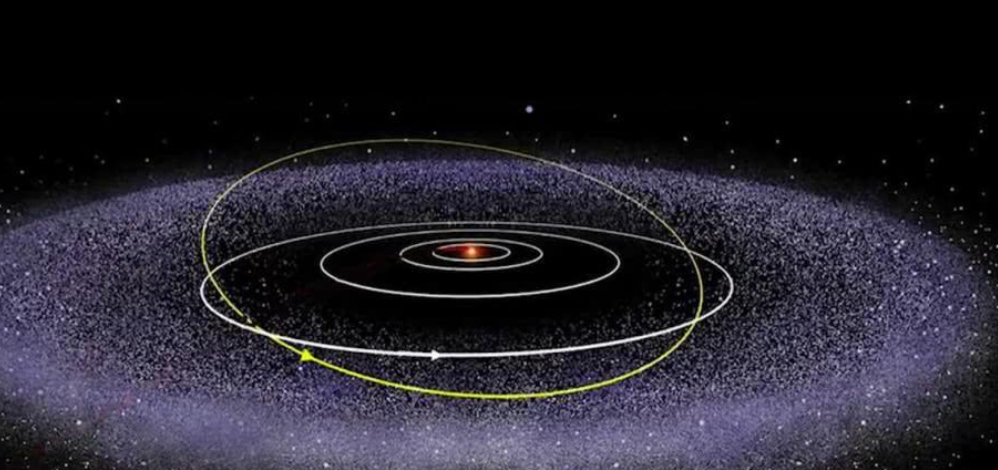
Simply put, the Kuiper Belt is a “belt of icy debris” at the edge of the solar system.
It is located beyond the orbit of Neptune , approximately 30 to 50 astronomical units from the Sun (one astronomical unit is the distance from the Earth to the Sun).
Here, there are thousands of “frozen chunks” that are the original material left over from the early days of the solar system.
It is like a huge “freezer” that preserves the ancient memories of the solar system.
To give an analogy: If the solar system is compared to a lively family, the Kuiper Belt is the farthest warehouse, which is filled with old boxes that have not been opened yet, and no one knows what is inside.
What objects are in the Kuiper Belt?
1. Pluto
Speaking of the Kuiper Belt, the most famous “resident” is of course Pluto.
It was once the ninth largest planet but was downgraded to a dwarf planet in 2006.
Scientists are rediscovering Pluto because they’ve discovered many similarities between it and other objects in the Kuiper Belt, such as its size, orbit, and composition.
In other words, Pluto is actually the most iconic figure in the Kuiper Belt.
2. Eris
Eris is almost the same size as Pluto and even slightly more massive. Its discovery sparked a heated debate about whether Pluto is a planet.
3. Other “unpopular stars”
Haumea: It has a strange shape, like a rugby ball, and it spins very fast.
Makemake: Its surface is covered with frozen methane and looks red.
There are also countless small celestial bodies, with diameters ranging from a few hundred kilometers to a few kilometers, quietly orbiting the edge of the solar system.
Together, these members form the “dots” of the Kuiper Belt.
Why is it called a “treasure chest”?
1. A time capsule of the solar system
The objects in the Kuiper Belt have undergone very little transformation, and their material state is similar to that when the solar system formed 4.5 billion years ago. Studying these objects is like opening the “archives” of the solar system, helping scientists reconstruct the process of planet formation.
2. Storage of ice and organic matter
Scientists have discovered that many Kuiper Belt objects contain water ice, methane, ammonia, and even complex organic molecules. These substances may be the “seeds” of life’s origin. In other words, life on Earth may have some connection to this distant, icy world.
3. Potential “Planet Nine”
In recent years, studies have suggested that the unusual orbital distribution of some Kuiper Belt objects may indicate the presence of a supermassive planet, dubbed “Planet Nine,” lurking even further out. If this hypothesis holds true, it would be the most sensational discovery since Pluto’s demotion.
New Horizons’ Treasure Hunt
In 2015, NASA’s New Horizons probe successfully flew past Pluto and took stunning photos, allowing us to see the true face of the Kuiper Belt up close for the first time.
Pluto’s surface has huge ice fields and spectacular mountains, which completely subvert people’s imagination of a “cold and dead planet”.
After the flyby, New Horizons continued its journey deep into the Kuiper Belt, visiting Arrokoth in 2019. Arrokoth is a binary object resembling a “snowman.” Its shape and state further support the theory of the solar system’s initial “building block” formation.
It can be said that New Horizons has opened up mankind’s true Kuiper Belt expedition.
What does the Kuiper Belt have to do with us?
Many people may ask: What do these ice lumps billions of kilometers away have to do with us on Earth? Actually, they are quite relevant.
Understanding the origin of life : Kuiper belt objects may carry organic matter that can help us understand the initial chemical basis of life.
A puzzle piece for planetary science : Without studying the Kuiper Belt, we cannot fully explain how the solar system evolved.
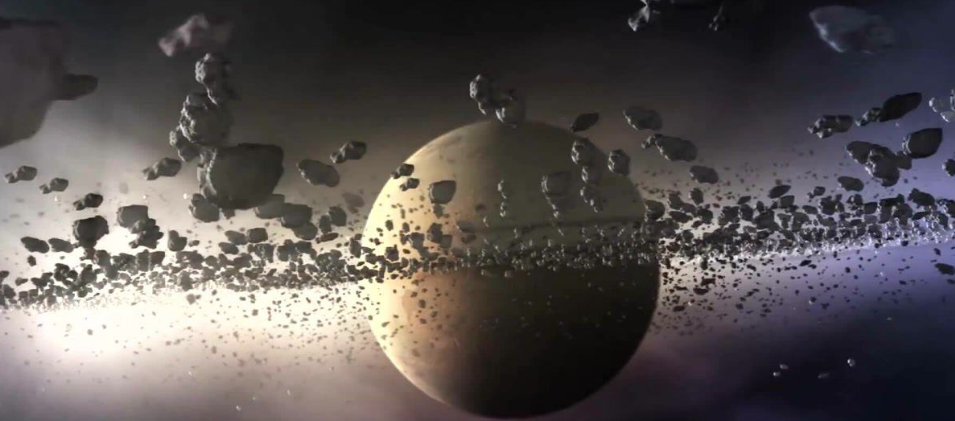
Potential threat : Some Kuiper Belt objects could be disturbed and transported into the inner solar system, becoming comets. If they were to collide with Earth, the consequences would be disastrous.
In other words, the Kuiper Belt is not only a “treasure chest”, but may also contain potential “time bombs”.
Future exploration prospects
Scientists are already planning the next generation of exploration missions:
Some people have proposed launching a “Kuiper Belt Orbiter” to stay in that area for a long time.
Some people also envision sending multiple small probes to make a “collective visit” to dozens of celestial bodies.
A bolder idea is to use nuclear propulsion to send the probe faster and farther, directly to the Oort Cloud.
In the next few decades, humanity’s understanding of the Kuiper Belt may be as comprehensive as our understanding of Jupiter and Saturn today.
Summarize
The Kuiper Belt is called the “treasure chest” of the solar system because it contains:
The most primitive matter in the solar system is like a time capsule;
Repositories of water, ice, and organic matter, possibly related to the origin of life;
The mysterious orbital phenomenon may indicate the existence of the “ninth planet”.
Although this region is remote and cold, its scientific value is irreplaceable. Once more probes explore it in the future, the Kuiper Belt may bring us even more shocking surprises than Mars.
After all, sometimes the most precious treasures are often hidden in the most inconspicuous and remote corners.
https://www.wedtry.com/exploring-the-kuiper-belt-and-pluto-a-complete-guide-to-the-solar-systems-edge/