https://www.wedtry.com/the-sun-a-comprehensive-guide-to-the-engine-of-the-solar-system-and-solar-dynamics/
Have you ever looked up at the Sun, or seen news about “solar storms” and “coronal mass ejections (CME)” and felt a bit confused? Don’t worry — solar explosions aren’t science fiction. They’re actually happening every single day, like a dazzling, powerful energy show. Today, let’s talk about what’s really going on behind the scenes, from the Sun’s corona to those dramatic CMEs.
What Is the Corona? The Sun’s Fiery Outer Coat
The corona is the Sun’s outermost atmosphere, like a blazing coat that wraps around it. And get this — its temperature isn’t just hot, it’s millions of degrees Celsius, hotter than the Sun’s surface! It might look calm, but this layer is packed with magnetic energy.
What’s fascinating about the corona is that it’s the “birthplace” of both solar wind and CMEs. The stunning corona images we often see are captured during solar eclipses or in ultraviolet light, showing the Sun radiating pure power.
CME — The Shockwave of a Solar Explosion
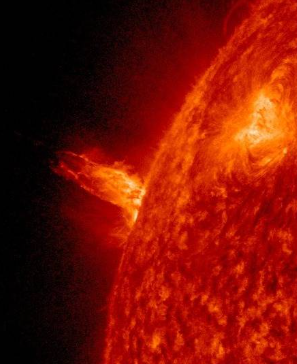
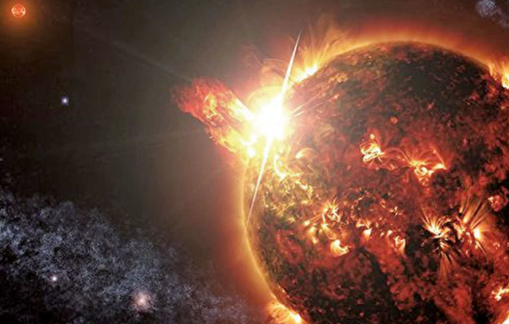
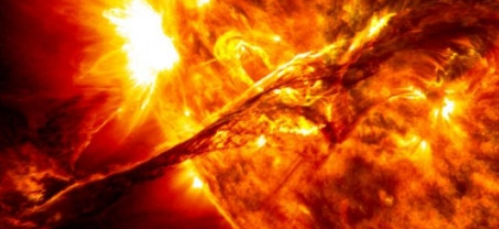
CME stands for Coronal Mass Ejection. In simple terms, it’s when the Sun builds up a huge amount of magnetic energy in its corona, and then, like a volcano erupting, suddenly throws out giant clouds of charged plasma into space.
This isn’t a small-scale event — CMEs can travel at speeds of hundreds to over a thousand kilometers per second. Imagine reaching the Moon’s distance from Earth in just a few minutes! And when one of these solar blasts heads toward Earth, it can trigger mesmerizing auroras, disrupt satellite communications, and even threaten power grids.
How Are CMEs Born? A “Tug-of-War” of Magnetic Fields
To understand CME formation, we need to talk about the Sun’s magnetic fields. The Sun’s surface is constantly rotating and churning, twisting its magnetic field lines like rubber bands. When these magnetic lines twist too much, they “snap” and release an enormous amount of energy, throwing plasma into space — that’s a CME.
Think of it like the Sun taking a deep breath: it “inhales” and stores energy, then “exhales” explosively to release pressure. Each CME is the Sun venting its energy to the cosmos, reminding us just how alive and powerful it really is.
What Do CMEs Mean for Earth?
CMEs happen millions of miles away, but their charged particles and magnetic waves can have a big impact here:
Aurora Shows: Northern and Southern Lights light up the skies in spectacular colors.
Satellite Disruptions: Strong magnetic storms can interfere with GPS and communication systems.
Power Grid Risks: Extremely powerful CMEs can destabilize power networks, which is why scientists monitor them closely.
While CMEs are amazing to watch, they’re also a reminder of the Sun’s raw power. Space agencies use satellites and telescopes to keep an eye on solar activity and issue early warnings to minimize risks.
How Can We Watch Solar Explosions?
You don’t need high-tech gear to appreciate the Sun’s energy:
Corona Observation: Solar eclipses or solar telescopes let us see the glowing halo of the corona.
Space-Based Observation: NASA, ESA, and other agencies use solar observatories like SOHO and SDO to track CME activity in real time.
Science Apps & Platforms: Astronomy apps and websites now share solar storm forecasts and aurora predictions with the public.
A Life Lesson from the Sun’s Explosions
Solar eruptions show us that power and energy come in rhythms. CMEs don’t happen constantly — they occur when energy in the corona builds up and reaches a breaking point. That’s a lot like life: stress, emotions, and creativity all need cycles of buildup and release. Learning to manage this rhythm makes us healthier and more balanced.
Seeing these cosmic events in this way helps us respect nature while appreciating how science and technology protect us — from forecasting auroras to shielding satellites.
Conclusion
From the corona to CMEs, the Sun is constantly putting on a display of energy. Even if we can’t see all its power, science lets us understand it, predict it, and marvel at its beauty. CMEs aren’t just astronomical phenomena — they also remind us of the importance of balance, rhythm, and energy in our own lives.
Next time you hear “solar storm” or see a stunning aurora photo, remember: behind that beauty is an incredible release of energy from the Sun’s corona.
The more we learn about it, the closer we get to understanding the universe — and maybe even ourselves.
https://www.wedtry.com/the-sun-a-comprehensive-guide-to-the-engine-of-the-solar-system-and-solar-dynamics/