https://www.wedtry.com/cosmic-debris-a-guide-to-meteorites-hygiea-comets/
Hygiea is a dwarf planet located in the asteroid belt of our solar system. Although it is not as famous as Ceres or Vesta, its unique characteristics and mysterious origin have attracted great interest from astronomers. This article will take you on an in-depth journey to explore this “hidden miracle” in the asteroid belt and reveal its secrets.
- Basic Introduction to Hygiea
Hygiea is the fourth largest object in the asteroid belt, with a diameter of about 430 kilometers. It lies between Mars and Jupiter and is mainly composed of carbon-rich material, giving its surface a relatively dark appearance. Due to its size and mass close to the dwarf planet criteria, the scientific community recently classified Hygiea as a dwarf planet.
The name Hygiea comes from the Greek goddess of health and hygiene, symbolizing purity and vitality. It was first observed in the early 19th century, in 1849, by Italian astronomer Annibale de Gasparis.
2. Geological Features and Surface Structure of Hygiea
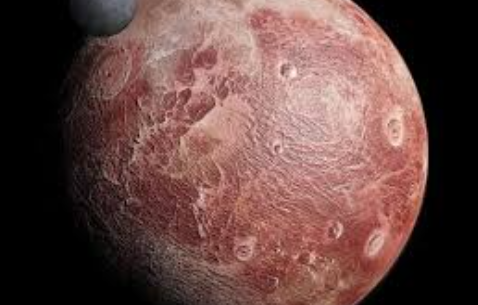
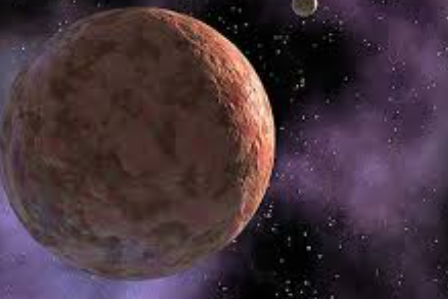
Hygiea’s surface is relatively uniform and has a low albedo, indicating it is covered with abundant carbonaceous dark material, similar to carbonaceous chondrite meteorites. Its shape is nearly spherical, but unlike Ceres, it lacks prominent mountains or large impact craters, suggesting a certain degree of geological evolution and self-gravity shaping.
In recent years, scientists using high-resolution telescopes and space probes discovered possible ice and mineral components on Hygiea’s surface, providing important clues about its internal structure and thermal evolution. Additionally, there are no obvious signs of volcanic or tectonic activity, indicating a relatively calm geological state.
3. Origin and Evolution of Hygiea
Hygiea formed about 4.6 billion years ago during the collapse of the solar nebula and is one of the oldest bodies left from the early solar system. Unlike many other asteroids, Hygiea likely experienced complex collisions and reassembly processes.
Scientists speculate that intense impacts caused Hygiea to lose many fragments, and it later reassembled into its relatively regular shape today. This evolutionary path makes it an important “witness” for studying the formation and changes within the asteroid belt.
Moreover, Hygiea’s abundant carbonaceous material and possible water ice content make it a key target for investigating the origin of water in the solar system. It might have delivered water and organic substances to the inner solar system, providing clues about Earth’s life origins.
4. Hygiea’s Unique Position in the Asteroid Belt
The asteroid belt consists of millions of small bodies of various sizes, and Hygiea is one of the largest, exerting significant gravitational influence. It is a “heavyweight” in the belt and affects the orbits of many surrounding smaller bodies.
Hygiea’s family consists of numerous rocky and carbonaceous asteroids likely formed from one or more collision events. Studying this family’s formation and evolution helps scientists better understand the violent collision history of the early solar system.
5. Future Exploration Missions and Scientific Importance
Currently, research on Hygiea mainly relies on ground-based telescopes and limited space probe data. With advancing technology, dedicated missions may be launched in the future to observe and sample Hygiea up close.
Exploring Hygiea can reveal its internal composition and structure and help solve scientific puzzles about early planetary formation and the evolution of small bodies. Its rich carbon content and potential water ice also make it valuable for future solar system resource utilization and interplanetary travel.
6. Summary
Hygiea is an important dwarf planet within the asteroid belt. Though not as famous as some larger bodies, it holds valuable information about the early solar system. Composed of carbonaceous material, with a complex evolution and stable geology, Hygiea is a treasure for astronomical research.
Deeper exploration in the future will help uncover secrets about the solar system’s origins and elevate humanity’s understanding of the cosmos. This “hidden miracle” awaits us to discover more unknowns and embark on a new journey of interstellar exploration.
https://www.wedtry.com/cosmic-debris-a-guide-to-meteorites-hygiea-comets/