https://www.wedtry.com/the-cosmic-dance-a-complete-guide-to-orbits-and-gravity/
You may have seen news reports about a probe heading for an exoplanet, but its trajectory isn’t a straight line. Instead, it zigzags and zigzags, even “passing by” other planets. Many people wonder:
If the target is Saturn, why not just head straight for it? Why go in such a long, circular motion? Is it because the rocket isn’t powerful enough?
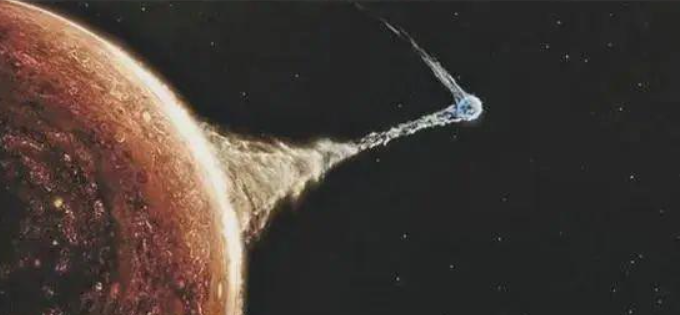
In reality, this isn’t a case of engineers “going the other way,” but rather a clever physics trick: gravity assist (also known as a gravitational slingshot) . It allows a spacecraft to achieve “acceleration” or “direction change” without the need for additional fuel. Simply put, it’s a free acceleration, leveraging the force of the planets .
Today, let’s talk about the magic behind it.
Flying straight? Wishful thinking
Many people believe that space is vast and that a spacecraft can simply aim at a target point and launch it to fly straight there.
But the reality is that things are far from that simple.
First, the planets are not stationary, but orbit the sun. If you fly directly toward a planet’s current location, by the time you get there, it will have moved somewhere else.
Secondly, there’s the fuel issue. Most of the fuel a rocket carries on launch is consumed during takeoff and during the process of escaping Earth’s gravity. Once in space, the spacecraft has very limited propellant available. Relying solely on thrusters to accelerate to an outer planet is practically impossible.
Therefore, scientists came up with a solution: why not use the gravity of the planet to give the spacecraft a “tailwind push”.
Gravitational slingshot: A ride in space
You can think of the gravitational slingshot as a ride through space.
When a spacecraft approaches a planet, it is attracted by its gravity, causing it to accelerate. But this raises a question: How can a planet impart energy to the spacecraft for free? Doesn’t this violate the law of conservation of energy?
The answer is: the spacecraft does obtain energy, but this energy is actually “borrowed” from the planet.
For example, this is how the Voyager probes traveled to the outer solar system. As they passed Jupiter, their gravity increased their speed and changed the direction of their orbits. This slowed Jupiter’s motion ever so slightly, but this loss of speed is negligible given the massive size of the planet.
It’s like a big truck pulls you along the road; you gain acceleration, but the truck’s speed barely changes.
The magic of circles
So why does it seem like the spacecraft’s orbit always goes around in circles?
This is because gravity assist is not a simple linear acceleration, but an orbital adjustment . The spacecraft must enter the planet’s gravitational field at the right angle and then be “thrown” out at the right speed to achieve the best acceleration.
It’s like a slingshot: You pull the stone into the rubber band, and if you get the direction right, it will fly far and accurately. If you get the angle wrong, it will either miss or fall flat on its face.
Therefore, engineers will carefully calculate so that the spacecraft’s path appears to go around in a big circle, but in fact it is through precise physical calculations that the most fuel-saving and efficient flight can be achieved.
Classic Case: Voyager’s “Hitchhiking”
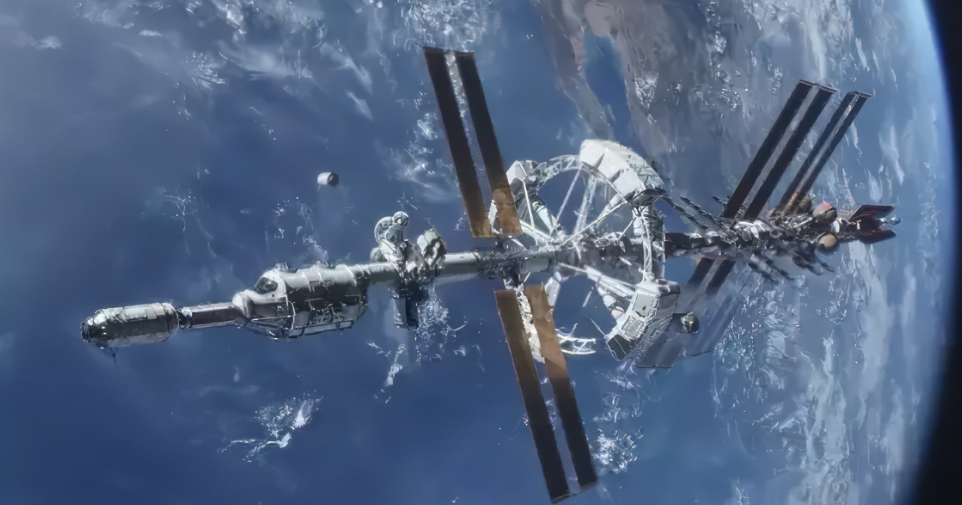
Voyager 1 and 2 , launched in 1977 , are the best examples of gravitational slingshot .
At that time, the spacecraft happened to encounter a rare situation of “conjunction” of outer planets. The engineers seized the opportunity and designed a “multiple gravity assist” route: the spacecraft first went to Jupiter to borrow a force, then to Saturn to accelerate, and then to Uranus and Neptune… step by step, it was thrown to the edge of the solar system.
The result is that Voyager 2 flew past four planets in just over a decade, whereas it would have taken hundreds of years to accomplish this feat if powered by conventional fuels.
This is the value of “going in circles” – it seems like you are going farther, but in fact you are going faster.
The boundary between reality and imagination
The gravity slingshot may sound like magic, but it is completely based on the laws of physics and is the most commonly used “cost-saving and labor-saving” technique in aerospace engineering.
However, it also has limitations:
You need to wait for the right planetary alignment, which sometimes only happens once every few decades.
The spacecraft must enter the planet’s gravitational field according to strict timing and orbit; even the slightest error could lead to the failure of the entire mission.
Gravity assist cannot be used infinitely because the distribution and arrangement of planets are limited.
In the future, scientists have even imagined that if the powerful gravitational pull of a black hole is used as a “slingshot,” spacecraft could theoretically reach speeds close to the speed of light. Of course, this sounds more like science fiction than reality.
Summary : Human wisdom of leveraging force to counter force
Why does the spacecraft go in a circle? The answer is simple: it’s not because of poor technology, but because humans are smart enough.
In the vastness of the universe, fuel is scarce, distances are vast, and direct assaults are simply not feasible. So scientists have learned to “borrow force to counter force”: using the gravity of planets to allow spacecraft to achieve graceful accelerations across the cosmic stage, like a gliding dancer gently tossed by their partner, spinning and soaring toward the unknown beyond.
Next time you see a probe taking a detour in the news, don’t be surprised. It’s not a detour; scientists are using the magic of gravity to create a shortcut for humanity to reach the stars.
https://www.wedtry.com/the-cosmic-dance-a-complete-guide-to-orbits-and-gravity/

