https://www.wedtry.com/a-complete-guide-to-the-planets-of-our-solar-system/
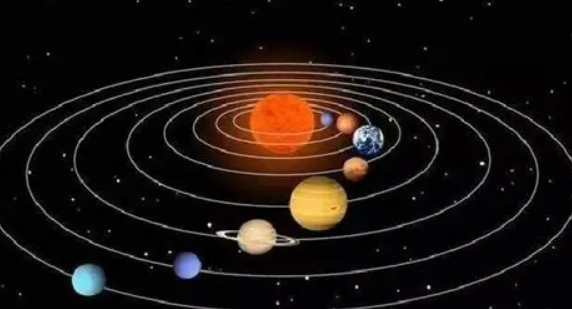
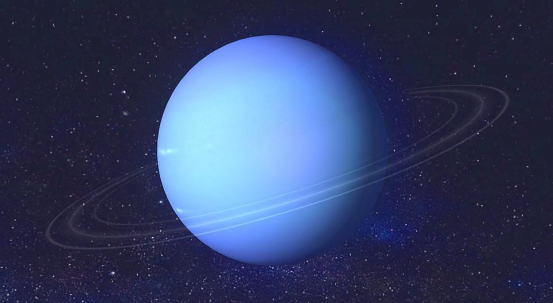
At the far edge of the solar system, Neptune is famous for its deep icy blue light and violent storm system. As the eighth planet in the solar system, it is about 4.3 billion kilometers away from the Earth and is one of the least explored planets by humans. However, in recent years, through the historical data of NASA’s Hubble Space Telescope and Voyager 2, scientists are gradually unveiling the layers of this ice giant.
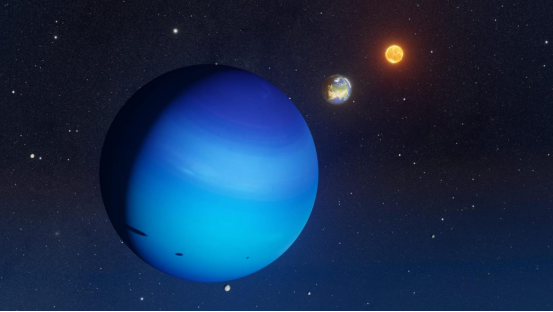
1. The Secret of the Ice Blue Appearance
Neptune’s atmosphere is mainly composed of hydrogen, helium and trace amounts of methane, of which methane strongly absorbs red light in sunlight and reflects a charming blue light, making it the “bluest” planet in the solar system. NASA’s spectral analysis shows that there may be other unknown organic compounds in its atmosphere, which further affect its color changes .
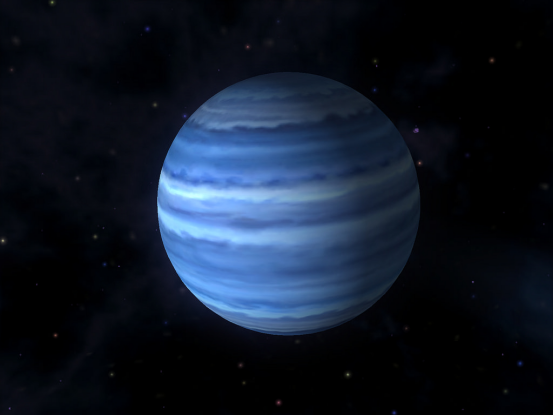
Although Neptune receives only 1/900 of the sunlight that Earth receives, its wind speeds can reach about 1,300 miles per hour, making it the most violent storm system in the solar system. NASA’s Hubble Telescope observed a giant dark spot in 2018, but its life span only lasted a few years. Scientists speculate that this is related to the thermodynamic activity of Neptune’s deep atmosphere.
3. Cold yet lively interior
A joint study by MIT and the University of California, Berkeley, suggests that Neptune may have a supercritical fluid ocean of water, ammonia, and methane inside it, with temperatures as high as 5,000°C, but the huge pressure keeps it solid. This unique structure may drive the planet’s extreme magnetic field and thermal radiation anomalies.
4. Future Exploration Missions
Currently, NASA’s “Neptune Orbiter” concept mission is being demonstrated, and it is planned to carry penetrating radar and atmospheric probes, with the goal of launching in the 2030s. The European Space Agency’s “Neptune Icy Moon Mission” may also cooperate to explore the frozen world of Neptune and its satellite Triton.
The existence of Neptune reminds us of the vastness and mystery of the solar system. As the chief scientist of the Planetary Science Institute said, “Each ice giant is a ‘time capsule’ of planetary evolution.” With the advancement of technology, humans may eventually solve all the mysteries behind this blue planet.
https://www.wedtry.com/a-complete-guide-to-the-planets-of-our-solar-system/