https://www.wedtry.com/a-complete-guide-to-the-planets-of-our-solar-system/
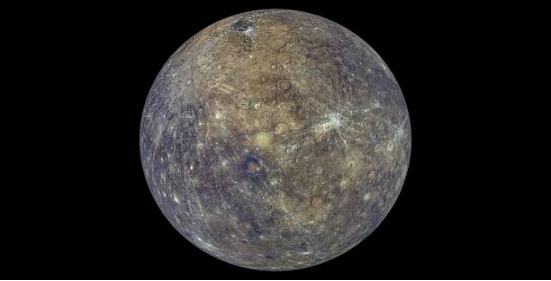
Of the eight planets in the solar system, Mercury is perhaps the most overlooked – it is small, closest to the sun, and often hidden in the glare of the sun. However, this seemingly inconspicuous planet hides many shocking extreme features. With the help of NASA’s MESSENGER probe and the future BepiColombo mission, scientists are gradually uncovering its mysteries.
1. Extreme temperatures: from 800 degrees Fahrenheit to -290 degrees
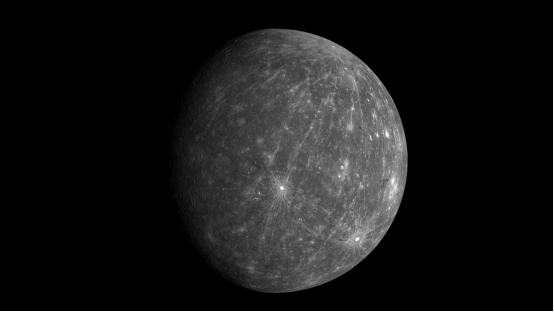
Mercury is the planet with the largest temperature difference in the solar system. With almost no atmosphere, its surface temperature can soar to 800 degrees Fahrenheit during the day and plummet to -290 degrees Fahrenheit at night. Such extreme conditions make Mercury one of the least suitable planets for human survival in the solar system.
2. Super long “day”: 176 Earth days to welcome the sunrise
Mercury rotates very slowly, with one “Mercury day” equal to 58.6 Earth days. Since it only takes 88 Earth days to orbit the sun, a complete sunrise-sunset cycle on Mercury occurs every 176 Earth days. This means that if you stand at a certain location on Mercury, you may have to wait nearly half a year to see the sun rise again!
3. Huge iron core: 85% of the planet’s volume
Mercury’s density is second only to Earth’s, but its core is unusually large, occupying about 85% of the planet’s radius , compared to Earth’s core which only occupies 50% of the radius. Scientists speculate that Mercury may have suffered a huge impact in its early days, causing most of its crust and mantle to be stripped away, leaving only an iron-rich core.
4. Ice in polar craters? NASA probe’s surprising discovery
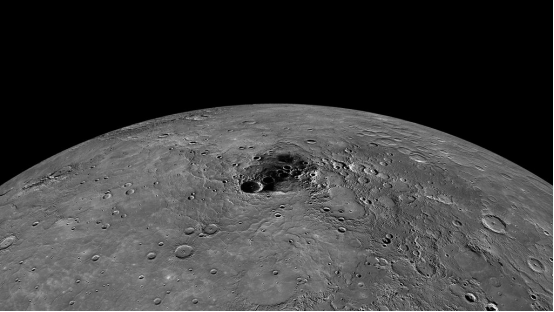
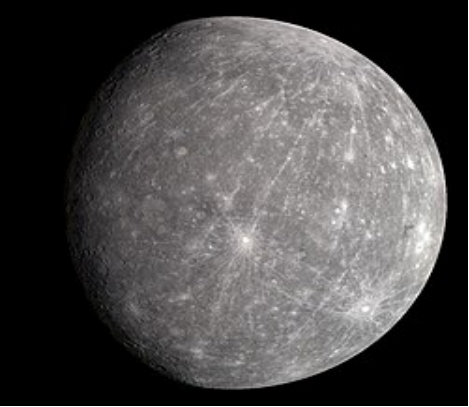
Despite Mercury’s extremely high surface temperature, NASA’s MESSENGER probe has found traces of water ice in permanently shadowed craters at its poles. This ice may have been brought by comet or asteroid impacts and has not been evaporated by the sun’s heat for billions of years. This discovery overturns the traditional perception that Mercury is dry and waterless.
5. Future exploration: BepiColombo mission
The BepiColombo mission, a collaboration between the European Space Agency and the Japan Aerospace Exploration Agency, was launched in 2018 and is expected to arrive at Mercury in 2025. The mission will carry more advanced instruments to further study Mercury’s magnetic field, geological structure and polar ice, providing key data for NASA’s future exploration plans.
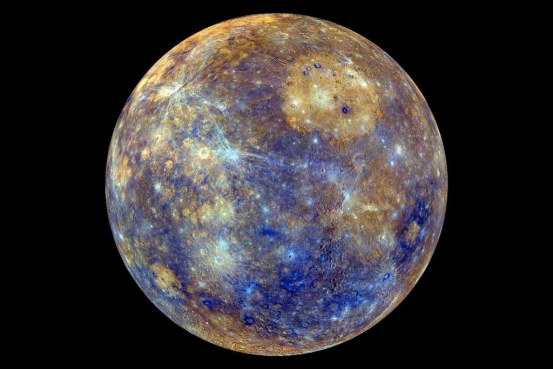
Mercury may not be as eye-catching as Mars or Jupiter, but its unique extreme environment, huge iron core and potential ice storage make it one of the most worthy planets to study in the solar system. As U.S. and international exploration missions advance, this mysterious planet will continue to bring us more surprises.
https://www.wedtry.com/a-complete-guide-to-the-planets-of-our-solar-system/