https://www.wedtry.com/the-evolution-of-the-solar-system-from-planetary-rings-to-the-secrets-of-ceres-and-mars-moons/
When you look up at the night sky, Saturn’s glittering rings always steal the show. It’s like the “fashion icon” of our solar system, rocking its own unique accessory that has fascinated astronomers for centuries. But have you ever wondered where these planetary rings came from? Are they “leftovers” from a planet’s growth, or remnants of some dramatic cosmic event? Scientists have spent decades studying this puzzle and are still piecing it together. Today, let’s dive into the mysterious stories behind the glowing rings orbiting planets.
Planetary Rings Aren’t Saturn’s Exclusive Feature
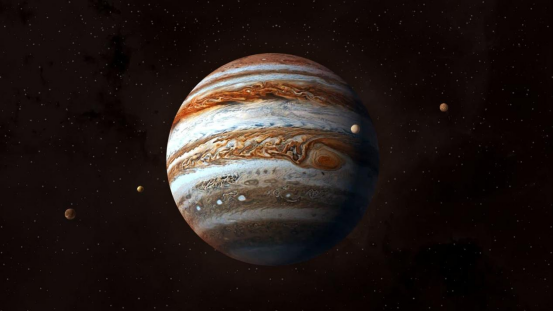
When people hear “planetary rings,” Saturn is usually the first thing that comes to mind. And yes, Saturn’s rings are the most stunning and obvious—you can even see them through a small backyard telescope. But actually, Jupiter, Uranus, and Neptune all have their own ring systems too. They’re just much dimmer and harder to spot.
These rings, no matter which planet they orbit, are made of ice, rock, and dust. Some particles are as large as pebbles, while others are as fine as grains of sand. Over time, these particles collide, rub against each other, and settle into thin, flat disks that gracefully orbit their host planets.
Two Main Theories About Ring Formation
1.The Collision and Breakup Theory
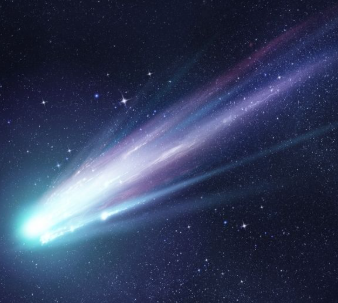
Some scientists believe planetary rings are made from shattered celestial bodies. Imagine a comet, asteroid, or even a moon straying too close to a planet. The planet’s powerful gravity rips it apart into countless fragments. These fragments get trapped by the planet’s gravity and form rings.
This process is linked to something called the Roche Limit—if an object crosses this critical distance from a planet, tidal forces can tear it apart. Saturn’s rings may have formed this way, possibly from a destroyed moon that left behind all those icy fragments.
2.The Leftover Material Theory
Another idea is that rings are like “cosmic leftovers” from when planets were forming. In the early solar system, swirling clouds of gas and dust birthed planets, but not all material got incorporated. Some of it stayed behind, trapped in orbit, forming rings. If that’s true, Saturn’s rings and others are ancient relics—frozen memories from over 4.6 billion years ago.
Why Do Giant Planets Get All the Glamour?
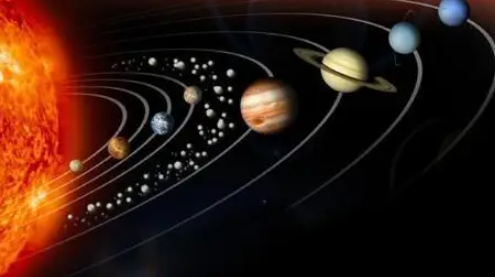
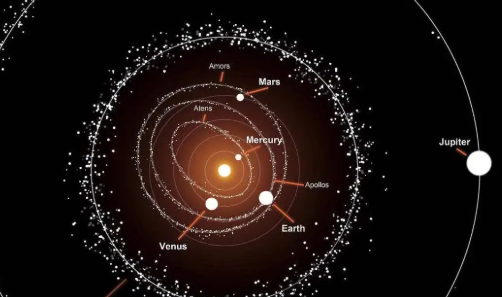
It’s curious that Mercury, Venus, Earth, and Mars don’t have glamorous rings. Why? Scientists think it’s because gas giants are bigger, colder, and have stronger gravity, which makes it easier for them to hold on to icy material.
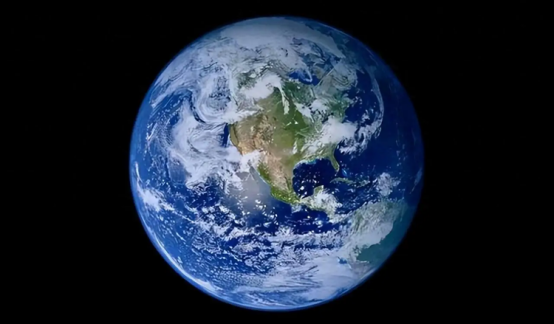
Earth-sized planets, on the other hand, likely couldn’t retain rings. Even if Earth once had rings, the Moon’s gravitational pull and the solar wind probably scattered them quickly.
Saturn’s Rings May Not Last Forever
Here’s a surprising fact: Saturn’s iconic rings might not be permanent. NASA’s Cassini spacecraft found that Saturn’s rings are slowly “raining” down into the planet, disappearing at a rate of hundreds of kilograms per second. That means they could vanish in about 100 million years. We live at just the right time to witness their beauty—an astronomical privilege!
Why Studying Rings Matters: A “Cosmic Magnifying Glass”
Planetary rings are more than eye candy; they hold clues about the early solar system. By analyzing their particle sizes, chemical makeup, and movement, scientists can reconstruct the history of how planets formed and how collisions shaped their evolution.
What’s more, rings help astronomers study exoplanets. Some exoplanets outside our solar system may have massive, breathtaking rings—much larger than Saturn’s. Learning about rings here helps us understand planetary systems light-years away.
Conclusion: A Mystery in Motion
Planetary rings are like time capsules, preserving the story of our solar system. Whether they’re leftovers from planet formation or scars from catastrophic collisions, they’re invaluable records of cosmic history.
Next time you look up at the stars, take a moment to imagine those distant rings quietly spinning billions of kilometers away, whispering the secrets of the universe.
https://www.wedtry.com/the-evolution-of-the-solar-system-from-planetary-rings-to-the-secrets-of-ceres-and-mars-moons/