https://www.wedtry.com/a-complete-guide-to-the-planets-of-our-solar-system/
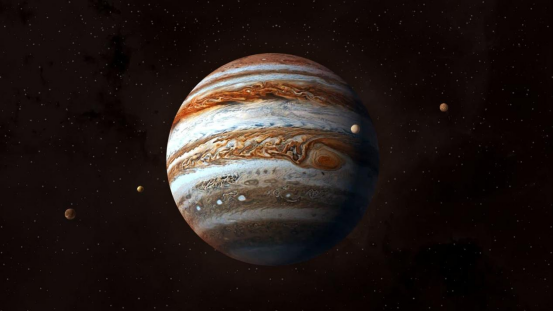
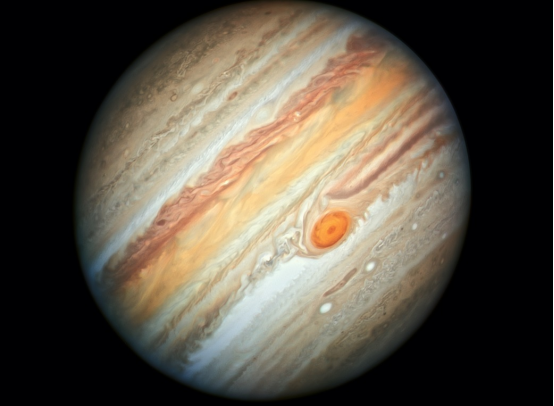
Jupiter, the largest planet in the solar system, is famous for its iconic striped cloud belts and the giant storm “Great Red Spot” that has lasted for hundreds of years. In recent years, observation data from NASA’s Juno probe and the Hubble Space Telescope have provided scientists with an unprecedented perspective to reveal the hidden violent weather systems and magnetic field mysteries of this gas giant. In this article, we will combine the research results of NASA, Caltech, Jet Propulsion Laboratory and other institutions to explore Jupiter’s stunning appearance and internal mechanisms.
1. Jupiter’s “face”: the art of cloud bands and storms
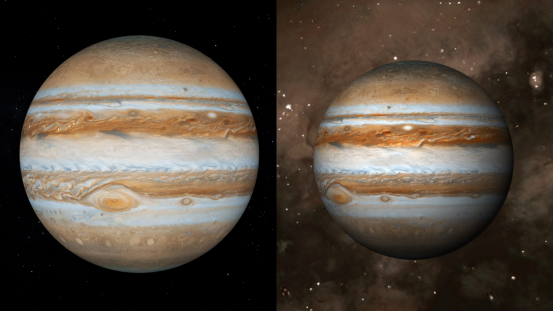
Jupiter’s atmosphere is mainly composed of hydrogen and helium, but its brilliant colors come from complex chemical reactions of compounds such as ammonia ice and sulfides. NASA’s Juno mission discovered that Jupiter’s cloud band structure can extend to about 1,900 miles below the atmosphere, far beyond previously expected.
The Great Red Spot: This super storm, about 13,000 miles in diameter, is big enough to engulf the entire Earth. Long-term monitoring by the Hubble telescope shows that its size is slowly shrinking, but its wind speed continues to increase, with a peak of more than 400 miles per hour.
Polar Cyclone Group: Juno captured for the first time a giant cyclone array at Jupiter’s north pole – nine storms arranged in a polygon, each more than 2,500 miles in diameter, and their formation mechanism remains a mystery.
2. Magnetic field and aurora: the strongest energy field in the solar system
Jupiter’s magnetic field is 14 times stronger than Earth’s, and its magnetosphere even reaches near Saturn’s orbit. Research from NASA’s Goddard Space Flight Center points out:
The energy for Jupiter’s auroras comes mainly from charged particles released by volcanic activity on its satellites, and the brightness of the auroras can reach hundreds of times that of the Earth.
Juno has measured localized anomalies in Jupiter’s magnetic field, suggesting they may be driven by turbulent motion of metallic hydrogen.
3. Future Exploration: The Next Mission Led by the United States
In 2024, NASA plans to launch the Europa Clipper mission, which will focus on studying Jupiter’s icy moon Europa, but the probe will use Jupiter’s gravity to adjust its orbit and send back more atmospheric data. In addition, the infrared band observations of the Webb Space Telescope will supplement our understanding of Jupiter’s deep thermal structure.
Jupiter is not only the “king of planets” in the solar system, but also a natural laboratory for humans to understand gas giants. The United States continues to uncover the physical laws behind its violent appearance through cutting-edge equipment such as Juno and Hubble. From super storms to extreme magnetic fields, every discovery is rewriting textbooks. Perhaps one day in the future, we can also solve the ultimate mystery of whether there is solid matter in its core.
https://www.wedtry.com/a-complete-guide-to-the-planets-of-our-solar-system/