https://www.wedtry.com/a-complete-guide-to-the-planets-of-our-solar-system/
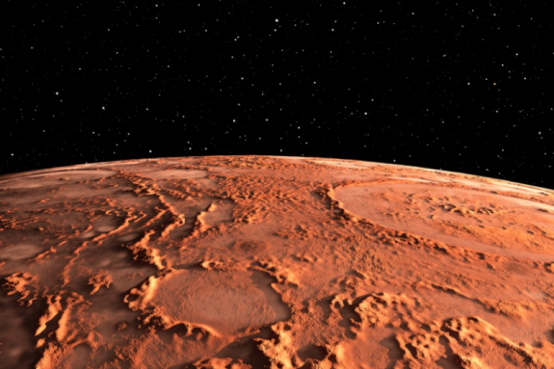
Mars, the red planet located 140 million miles away from Earth, has long inspired human curiosity and imagination. From the “God of War” of ancient astrologers to a popular target of modern space exploration, Mars has become one of the most watched planets in the solar system with its unique landforms, potential water resources and similarities to Earth. This article will deeply analyze the physical characteristics, climate environment, geological history and future exploration prospects of Mars, giving you a comprehensive understanding of this mysterious planet that may become a second home for mankind.
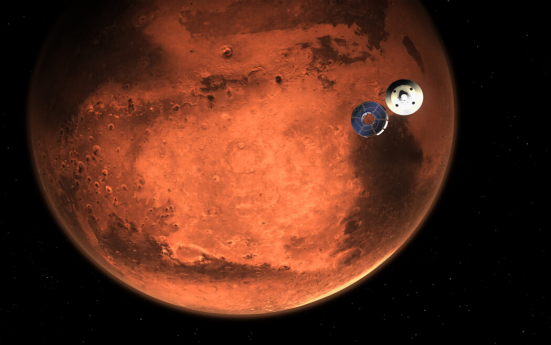
1. Basic parameters of Mars
Size and Mass: Mars has a diameter of about 4,212 miles, about 53% of Earth’s, and a mass of only 3.39×10²³ pounds, with a gravity of only 38% of Earth’s.
Orbit and rotation: Mars has an orbital period of 687 Earth days and a rotation period of 24 hours and 37 minutes, similar to Earth, so it has a distinct alternation of day and night.
Seasonal changes: Mars’s axial tilt of 25.2° causes distinct four seasons, but each season is about twice as long as that of Earth.
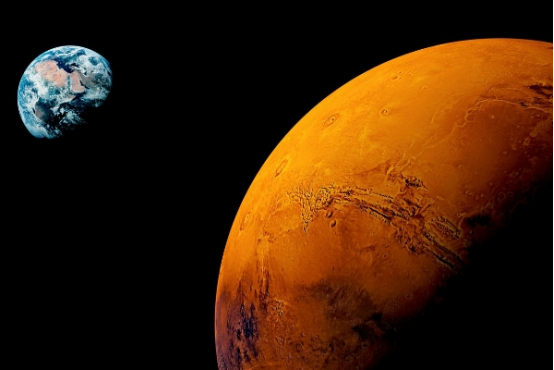
2. Mars’s landforms and geological features
The tallest mountain in the solar system: Olympus Mons is 16 miles tall, nearly three times as tall as Mount Everest.
Largest Canyon: Valles Marineris stretches 2,500 miles and is 4.3 miles deep, far exceeding the Grand Canyon.
Polar ice caps: The north and south poles of Mars are covered with dry ice and water ice, which can extend to 49° latitude in winter and partially sublimate in summer.
3. Mars atmosphere and climate
Thin atmosphere: The density of Mars’ atmosphere is only 1% of the Earth’s. Its main components are 95% CO₂, 2.7% nitrogen, 1.6% argon, and almost no oxygen.
Temperature Extremes: Average temperature is -81°F, dropping to -195°F at the poles in winter and up to 70°F at the equator in summer.
Global dust storms: Martian winds can reach gusts of up to 60 miles per hour, occasionally causing dust storms that last for months and cover the entire planet.
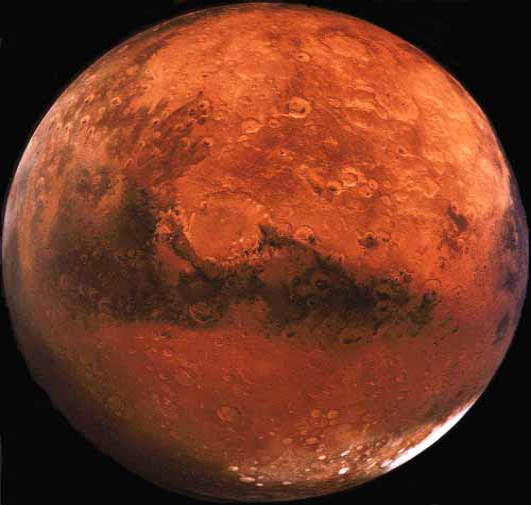
4. Water on Mars: Past and Present
Ancient rivers and lakes: The probe discovered dry riverbeds, deltas and mineral deposits, proving that liquid water existed on the surface of Mars billions of years ago.
Underground ice layer: Radar detection shows that a large amount of water ice is buried underground in the mid-latitudes of Mars, and the ice content in some areas reaches 40%.
Seasonal saline water: Dark streaks appear on some slopes, possibly traces of brief flows of highly saline liquid water.
5. Mars Exploration: From Robots to Human Colonization
Probe missions: NASA’s Perseverance is searching for signs of ancient life, and ESA’s ExoMars program is analyzing underground soil.
Future manned missions: SpaceX’s Starship aims to send humans to Mars and establish a sustainable base in the 2030s.
Terraforming Mars: Long-term vision includes releasing CO₂ to thicken the atmosphere and melt the ice to create a greenhouse effect, but the technical challenges are huge.
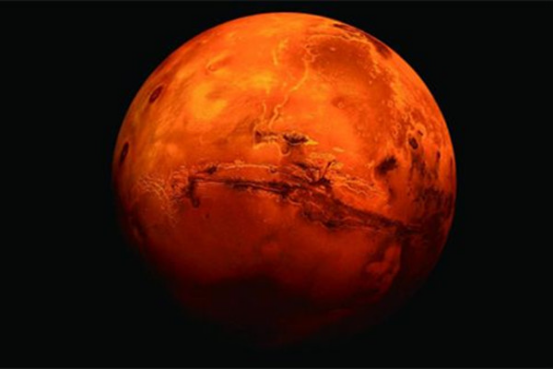
Mars is not only the most Earth-like planet in the solar system, but also a key step for humanity towards interstellar civilization. With the advancement of exploration technology and the preparation of manned missions, the mystery of this red planet is gradually being unveiled. Perhaps in the near future, “Martians” will no longer be just characters in science fiction, but real interstellar pioneers.
https://www.wedtry.com/a-complete-guide-to-the-planets-of-our-solar-system/