https://www.wedtry.com/a-complete-guide-to-the-planets-of-our-solar-system/
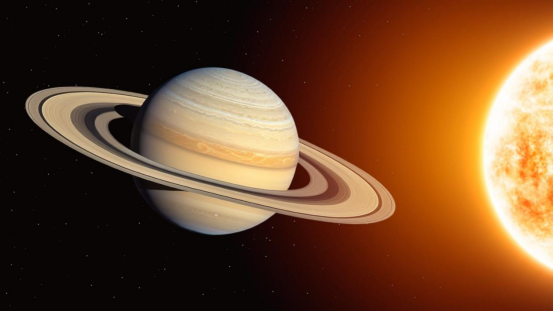
Saturn, the most eye-catching gas giant in the solar system, is famous for its magnificent ring system. NASA and many astronomers have gradually unveiled its mystery through decades of observation and exploration. From the close exploration of the Cassini probe to the infrared imaging of the James Webb Space Telescope, the beauty and complexity of Saturn are being decoded bit by bit by humans.
1. Basic characteristics of Saturn: the “jewel” of the solar system
Saturn is the sixth planet in the solar system, with a diameter of about 74,900 miles, second only to Jupiter in size. Its average density is lower than that of water, and if it could find a large enough ocean, Saturn could even float on the water!
The rotation speed is extremely fast: Saturn’s rotation period is about 10.7 hours, which causes its equatorial region to be significantly bulged and have an oblate spheroid shape.
Atmospheric composition: Mainly composed of hydrogen and helium, ammonia ice crystal clouds in the upper atmosphere form unique striped storm belts.
2. Ring system: NASA’s exploration reveals amazing details
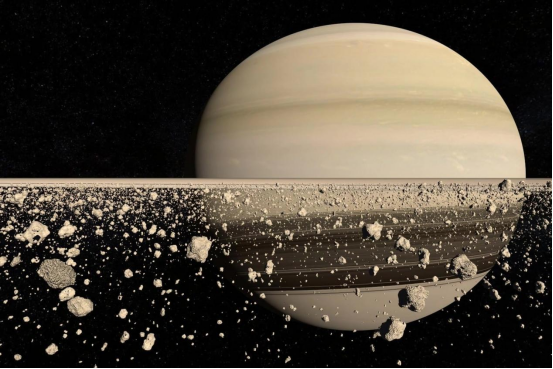
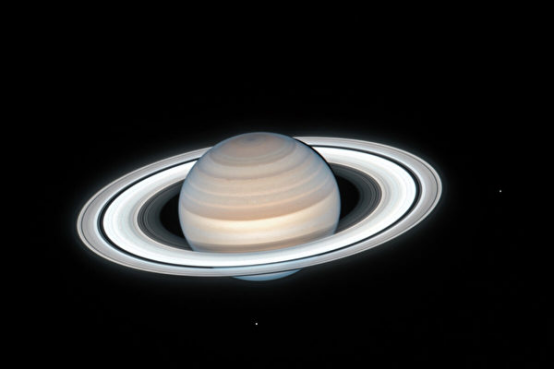
Saturn’s rings are one of the most spectacular sights in the solar system, mainly composed of ice particles, rocks and dust. According to NASA’s observation data:
Total width of the ring: about 175,000 miles, but average thickness is only about 30 feet, paper-thin relative to its width.
The main halo bands: from the inside to the outside, they are D ring, C ring, B ring, A ring, F ring, G ring and E ring, among which B ring is the brightest.
The Cassini mission discovered that Saturn’s rings are not static, but instead exhibit complex dynamical phenomena, such as “spiral density waves” and the gravitational sculpting of the rings by microsatellites.
3. Saturn’s family of satellites: potential habitats for life?
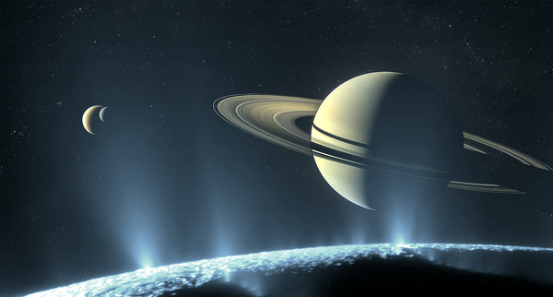
Saturn has 146 confirmed moons, of which Titan and Enceladus are the most popular among scientists.
Titan: The only satellite in the solar system with a thick atmosphere. NASA’s “Dragonfly” mission plans to land on its surface in 2034 to explore the distribution of organic molecules.
Enceladus: Cassini discovered that the ice plumes erupting from its south pole contain water vapor, salts, and organic compounds, suggesting that a subsurface ocean could contain the conditions necessary for life.
4. Future exploration: Webb telescope and more missions
In 2023, infrared images of Saturn taken by the James Webb Space Telescope revealed the temperature distribution and seasonal changes in its upper atmosphere. The US astronomical community is planning the next mission .
“Saturn Ring Probe” concept: Study the age and origin of the rings.
A “Europa Clipper” mission: Detailed life detection on Enceladus.
Saturn is not only one of the most fascinating objects in the night sky, but also an important milestone in American space exploration. From the brilliant achievements of Cassini to future robotic missions, this “Lord of the Rings” will continue to inspire human imagination and scientific enthusiasm for the universe.
https://www.wedtry.com/a-complete-guide-to-the-planets-of-our-solar-system/