https://www.wedtry.com/beyond-earth-investigating-the-extraterrestrial-origins-of-life/
We often think of Earth as the sole cradle of life, but a long-standing mystery remains:
Did life simply emerge on Earth “out of thin air”?
Or did it actually originate from a more distant corner of the universe, simply “hitchhiking” here?
This question sounds like the opening of a science fiction movie, but it’s also like one of humanity’s oldest philosophical inquiries. Today, we’ll discuss this seemingly crazy, yet scientifically sound, hypothesis: If life didn’t begin on Earth, where did it come from?
Theory of Earth’s Origin: Life from Zero to One?
Conventional wisdom holds that Earth formed about 4.5 billion years ago as a hot ball of rock. As it cooled, oceans emerged on the surface, where a rich tapestry of chemical elements collided and combined.
In such a “primordial soup”, molecules such as amino acids and nucleotides aggregated step by step and eventually evolved into the earliest primitive life.
Sounds reasonable, right? But the problem is obvious:
A question of probability : What is the probability that complex molecules spontaneously assemble into life? Is it too low?
A question of timing : Less than a billion years after Earth formed, life already appeared. Is this rate “unreasonably fast”?
These questions made scientists begin to think: Could it be that the “seeds” of life did not come out of nothing on Earth, but were brought from the depths of the universe?
Cosmic Express: Does Life Come From Outer Space?
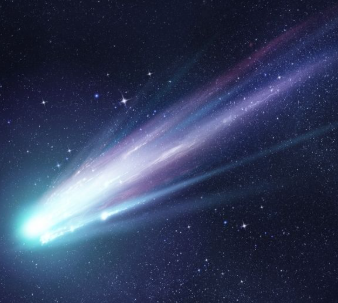
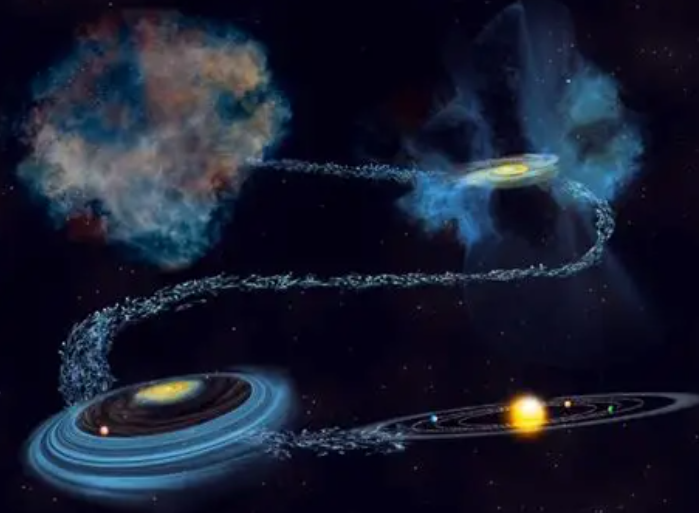
This is known as the Panspermia Hypothesis . Simply put, it holds that life, or the original ingredients of life, could have been delivered to Earth via meteorites, comets , or even interstellar dust.
It’s a bit like a cosmic “express delivery company,” scattering packages of “seeds of life” to different planets, with Earth being just one of the recipients.
Scientists are not just talking nonsense, they have a lot of evidence:
Organic matter in meteorites : Organic molecules such as amino acids have indeed been detected in some meteorites from outer space.
Space experiments : On the International Space Station and in some simulation experiments, scientists have discovered that certain microorganisms and organic molecules can survive for a long time under extreme conditions.
Comet research : Probes have discovered complex hydrocarbons on the surface of comets, which are the “raw materials” of life.
Therefore, from a scientific point of view, it is not completely impossible that the seeds of life came to Earth by hitching a ride on the universe.
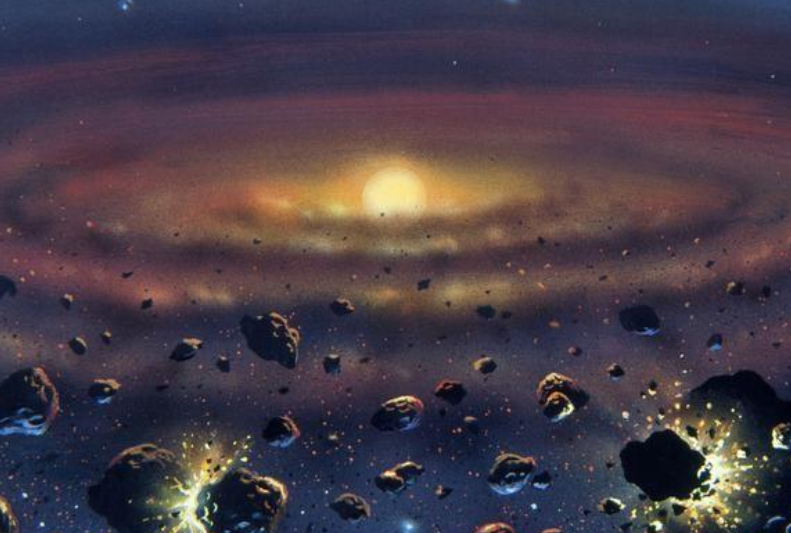
Candidate origin: a hotbed of life in the inner solar system
If there really were a “cosmic delivery service,” where would the drop-off points be? Within our solar system, there are a few popular candidates:
Mars
In the past, Mars had liquid water and an atmosphere, making its environment relatively mild. Some meteorites may even have traveled from Mars to Earth. In other words, a part of life on Earth might carry a “Martian household registration.”
Europa (Jupiter’s moon)
Beneath its icy shell lies a vast liquid ocean. Scientists believe the conditions there could be highly favorable for life to emerge.
Enceladus (Saturn’s moon)
The plumes of vapor it sprays into space contain organic compounds and sources of energy, making it look like a natural incubator for life.
Perhaps these places are the true “workshops of life,” while Earth is merely the “showroom.”
Further speculation: Star seeds
In addition to the solar system, scientists have also proposed a bolder possibility: the seeds of life came from other places in the Milky Way.
Some studies have shown that interstellar dust contains complex organic molecules, and that carbon-based chemical reactions common in the universe are entirely possible to occur simultaneously in countless galaxies. In this way, the potential for life is no longer “Earth-only” but “universal.”
If this is true, then life may be widespread throughout the universe, but most of it has not yet been discovered by us.
The intersection of science and philosophy
However, some people remind us that panspermia theory does not completely solve the problem. It only pushes the problem forward.
After all, even if the seeds of life came from outer space, the same question remains: how did life first arise? In other words: the “zero point” of life remains a mystery.
So this question isn’t just a scientific one; it touches on a philosophical level: Are we the product of chance, or the inevitable result of the laws of the universe?
Summary : Answers in Stardust
If life did not begin on Earth, it may have come from Mars, from comets, from interstellar dust, or even from the other side of the galaxy.
No matter which the answer is, it makes us realize again that life and the universe have never been separated, but closely connected.
Perhaps every atom in our bodies truly is a memory of stardust.
Perhaps the universe is not indifferent, but has, over eons, repeatedly sown the seeds of life, waiting for them to germinate on a planet somewhere.
So, next time you look up at the starry sky, think about this: the vast Milky Way may be our common “hometown”.
https://www.wedtry.com/beyond-earth-investigating-the-extraterrestrial-origins-of-life/